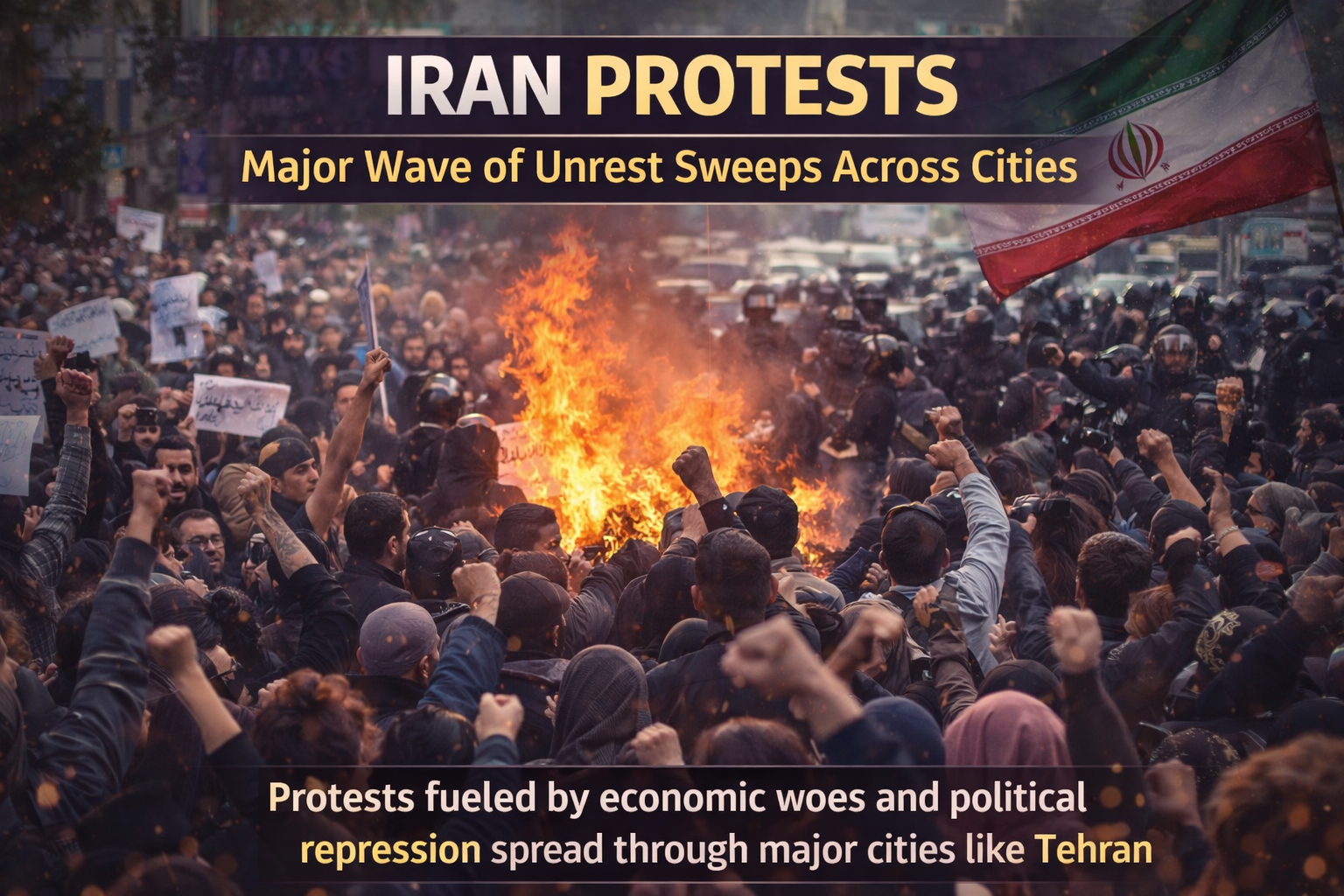
Thousands gather on the streets of Tehran as Iran witnesses one of its largest protest waves in years amid economic and political turmoil.
Iran Witnesses Major Wave of Unrest as Protests Erupt Across Cities.
Iran is witnessing one of the most significant waves of unrest in recent years, with thousands of people taking to the streets in Tehran and several other major cities. The protests, driven by economic hardship, political repression, and deteriorating living conditions, have sparked nationwide attention and raised concerns about stability in the country.
Protests Spread Across Major Cities
Verified videos circulating widely on social media platforms show large crowds marching through central Tehran, Mashhad, Isfahan, and other urban centres. Protesters can be heard chanting slogans critical of the ruling clerical leadership and calling for sweeping political and economic reforms. In some footage, demonstrators are seen occupying main roads and public squares, braving heavy security presence.
Observers say the scale and intensity of the demonstrations mark a significant escalation compared to sporadic protests seen in recent months. Unlike earlier unrest limited to specific regions, the current wave appears more coordinated and widespread, indicating deep-rooted public frustration.
Economic Crisis Fuels Public Anger
At the heart of the protests lies Iran’s worsening economic situation. Rising inflation, unemployment, currency depreciation, and shortages of essential goods have placed enormous pressure on ordinary citizens. Many Iranians say their purchasing power has collapsed, making it difficult to afford food, housing, and healthcare.
Protesters have accused the government of economic mismanagement and corruption, arguing that ordinary people are paying the price for failed policies and international isolation. “We cannot survive like this anymore,” one protester was heard shouting in a video from Tehran.
Political Repression and Demand for Change
Beyond economic grievances, demonstrators are voicing anger over restrictions on political freedoms, censorship, and lack of accountability. Chants heard during protests directly criticized the clerical establishment and called for fundamental political change.
In a notable development, protesters were also heard expressing support for Reza Pahlavi, the exiled son of Iran’s last monarch. Reza Pahlavi has publicly urged Iranians to continue peaceful demonstrations, calling the protests a historic opportunity for change. His name being openly chanted reflects growing dissatisfaction with the current system and a willingness among some protesters to rally around alternative leadership symbols.
Heavy Security Presence
Iranian authorities have deployed heavy security forces across key areas, including riot police and paramilitary units. While there have been reports of clashes in some locations, the full extent of arrests or injuries remains unclear, as state media has offered limited coverage of the unrest.
Internet disruptions and restrictions on social media platforms have also been reported, a tactic previously used by authorities to limit the spread of protest-related information. Despite these efforts, videos and eyewitness accounts continue to emerge online.
Government Response and Silence
So far, the Iranian government has largely downplayed the scale of the protests, with official media portraying them as isolated incidents. However, analysts say the widespread nature of the demonstrations suggests a deeper crisis of legitimacy.
Political experts note that public anger has been building for years due to a combination of economic sanctions, internal repression, and unmet promises of reform. The current unrest may represent a tipping point if protests continue and gain further momentum.
What Lies Ahead
It remains uncertain how the situation will evolve in the coming days. While Iran has previously managed to suppress large-scale protests, analysts warn that persistent economic pain and growing political frustration could make this wave harder to contain.
International observers are closely monitoring developments, as prolonged instability in Iran could have regional and global implications, particularly in energy markets and Middle East geopolitics.
Conclusion
The latest protests highlight a nation at a crossroads. With thousands of Iranians demanding change amid economic despair and political repression, the unrest reflects deep dissatisfaction within society. Whether these demonstrations lead to meaningful reform or face a forceful crackdown will shape Iran’s political future in the months ahead.
About the Author