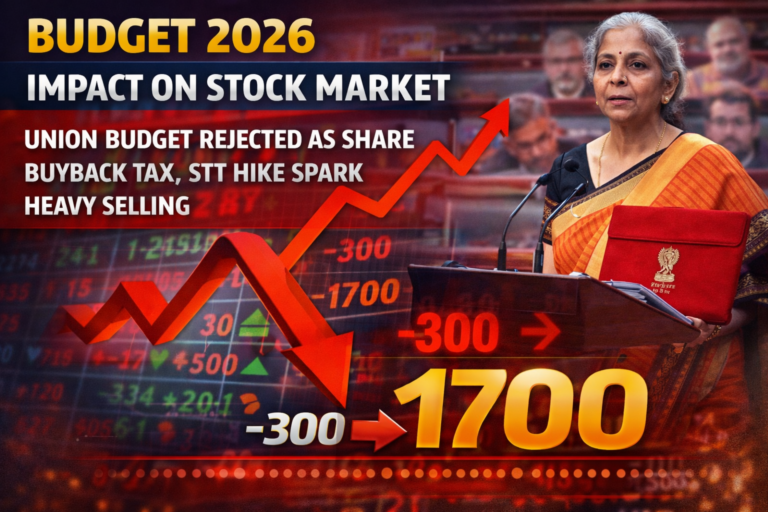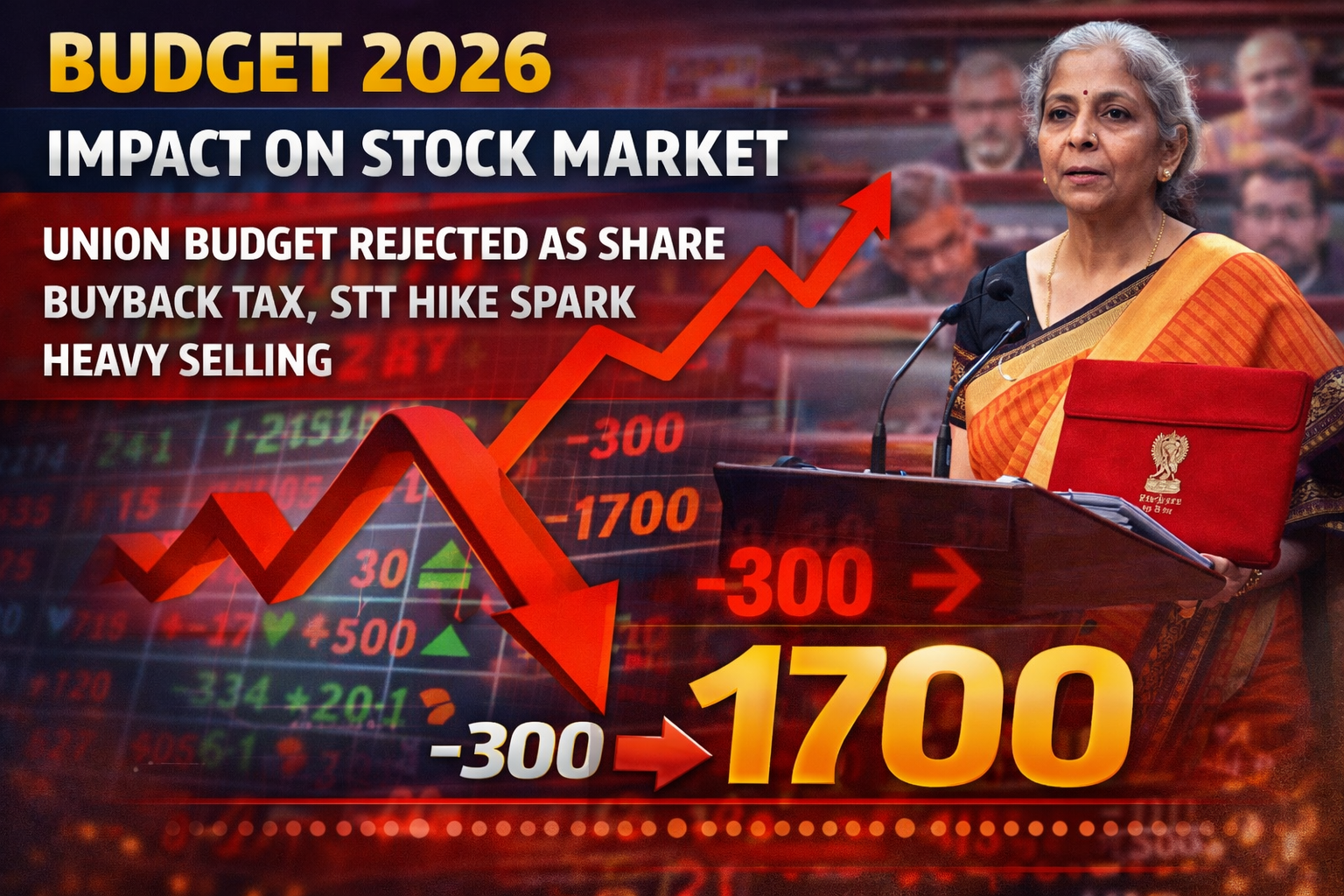
This image illustrates the sharp reaction of the Indian stock market to Union Budget 2026–27. It features Finance Minister Nirmala Sitharaman presenting the budget alongside a red downward market graph, symbolizing heavy selling triggered by new taxes on share buybacks and higher STT charges, which led to a major fall in Sensex and Nifty indices.
Budget 2026 Impact on Stock Market: Markets Reject Union Budget as New Taxes Trigger Sharp Sell-Off
The Indian stock market reacted sharply to the Union Budget 2026–27, with benchmark indices witnessing heavy losses during budget-day trading. What began as a positive session quickly turned into one of the worst intraday falls in recent months as investors expressed disappointment over new taxation measures, including a tax on share buybacks and an increase in Securities Transaction Tax (STT).
Before the Budget presentation, the market was trading nearly 300 points higher in early sessions, reflecting optimism among investors. However, as soon as Finance Minister Nirmala Sitharaman began announcing key proposals, sentiment shifted dramatically. The market plunged from a gain of over 300 points to a steep loss of nearly 1,700 points by mid-session, wiping out significant investor wealth.
New Tax Measures Shock Investors
The sharp decline was primarily driven by the government’s decision to introduce fresh taxes on corporate share buybacks and to raise STT charges on market transactions, especially in the derivatives segment. These moves came as a surprise to market participants who had expected relief measures or incentives to boost capital markets and corporate investment.
Market experts noted that the tax on share buybacks could discourage companies from returning surplus cash to shareholders, making stocks less attractive to long-term investors. Meanwhile, the hike in STT is expected to raise transaction costs for traders, particularly those active in futures and options trading.
“These proposals have increased the cost of investing and trading in equities. Naturally, the market reacted negatively as investors reassessed their strategies,” said a senior market analyst.
Broad-Based Selling Across Sectors
Selling pressure was seen across almost all sectors, with banking, IT, metal, and infrastructure stocks among the worst hit. Financial stocks came under particular stress as higher transaction taxes raised concerns about reduced trading volumes and profitability for brokerage firms.
Technology stocks also slipped due to worries about global economic uncertainty and tighter domestic policies. Mid-cap and small-cap stocks suffered even steeper losses, reflecting nervousness among retail investors.
The market volatility was further amplified by profit booking from institutional investors who chose to exit positions amid uncertainty surrounding the Budget’s long-term impact on growth and earnings.
Investor Confidence Takes a Hit
Analysts believe that the sudden market crash reflects disappointment over the absence of strong pro-market reforms. While the Budget focused on fiscal discipline, infrastructure development, and social welfare programs, investors were hoping for clearer measures to encourage private investment and strengthen capital markets.
Foreign institutional investors (FIIs) were also seen reducing exposure, adding pressure to already weak market sentiment. Domestic investors, particularly small traders, reacted with panic selling as the indices continued to slide.
“The Budget sends mixed signals. While it supports long-term economic stability, the immediate impact on equity markets is negative due to higher taxes and limited incentives for businesses,” said an economist from a leading financial institution.
Long-Term Outlook Still Uncertain
Despite the sharp fall, some experts believe that the market could stabilize in the coming days as investors digest the Budget details more carefully. They argue that government spending on infrastructure and manufacturing could eventually support corporate earnings in the medium to long term.
However, concerns remain about liquidity in the market, especially with higher transaction costs and uncertainty around taxation policies. Traders are expected to remain cautious in the near term, with volatility likely to persist.
A Turning Point for Market Sentiment
The dramatic swing from a 300-point gain to a 1,700-point loss highlights how sensitive markets remain to policy decisions. The reaction also underscores the importance of investor-friendly reforms in maintaining confidence in India’s financial markets.
As trading resumes in the coming sessions, attention will shift to corporate earnings, global cues, and government clarifications on taxation rules. For now, the stock market’s verdict on Budget 2026 appears clear: investors are wary, and trust will need time to rebuild.
The coming weeks will reveal whether the sell-off was a temporary emotional response or the beginning of a longer period of market correction following the Budget’s announcements.
About the Author