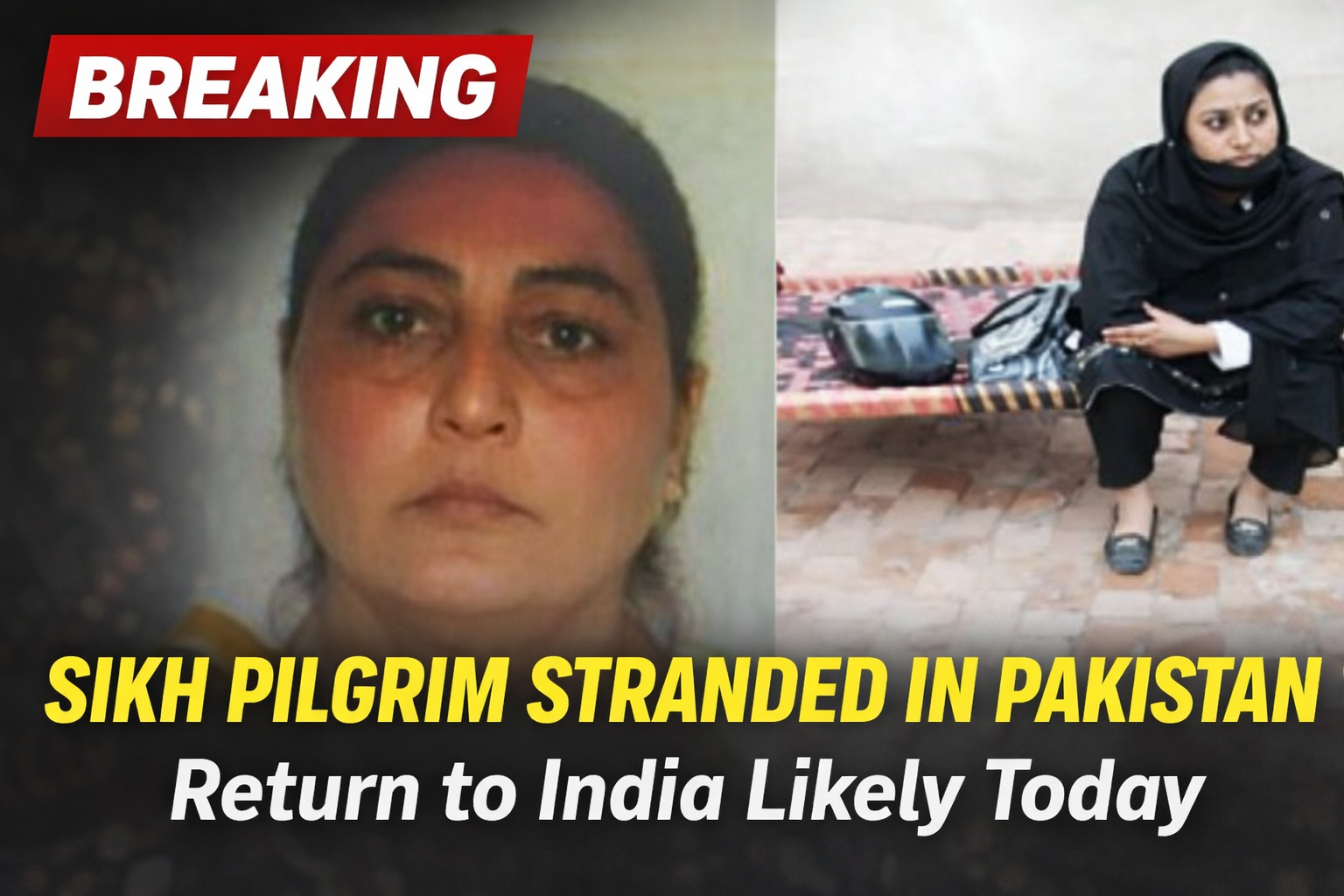
Sikh pilgrim Sarabjit Kaur, whose return to India was delayed, is expected to cross back after immigration clearance.
Sikh Pilgrim Sarabjit Kaur Likely to Return to India Today After Immigration Clearance
Sikh pilgrim Sarabjit Kaur is expected to return to India today after completing immigration clearance, bringing relief to her family and the Sikh community following days of uncertainty. Sarabjit Kaur, an Indian Sikh pilgrim who had travelled to Pakistan for religious purposes and reportedly got married there, has been at the center of attention after her return was unexpectedly delayed.
According to official sources, all necessary arrangements have now been completed for Sarabjit Kaur’s repatriation. She is likely to cross back into India via the Attari–Wagah Border once the final immigration formalities are concluded. Indian authorities have confirmed that they are fully prepared on their side to receive her.
Return Delayed at the Last Moment
Sarabjit Kaur’s return was initially scheduled for Monday through the Attari–Wagah international border. Indian officials, security agencies, and border authorities were already stationed and waiting for her arrival. However, in an unexpected development, Pakistan’s Interior Ministry halted her return at the last moment, citing administrative reasons. This sudden decision led to confusion and concern, especially as Sarabjit Kaur remained at the border area while officials worked to resolve the matter.
The delay sparked widespread discussion on social media and in news circles, with many questioning the reasons behind the last-minute stoppage. Family members in India expressed anxiety, urging authorities from both countries to ensure her safe and immediate return.
Marriage in Pakistan Draws Attention
Sarabjit Kaur had travelled to Pakistan as a Sikh pilgrim to visit revered gurdwaras. During her stay, she reportedly married a Pakistani national, which added complexity to her case. While cross-border marriages are not illegal, they often involve extensive documentation, visa conditions, and security clearances, particularly between India and Pakistan.
Officials familiar with the matter said that the delay was largely due to immigration and documentation checks rather than any criminal or security-related concerns. Both Indian and Pakistani authorities have been in communication to ensure that all procedures are followed as per international and domestic regulations.
Indian Authorities on Alert
Indian officials at the Attari border have remained on high alert since Monday. Security personnel, immigration officers, and local administration teams have been deployed to facilitate Sarabjit Kaur’s smooth entry once clearance is granted. Sources indicate that her return is now imminent and could take place at any time today.
A senior official stated that India has completed all required formalities and is only awaiting confirmation from the Pakistani side. “As soon as she is cleared for departure, we are ready to receive her,” the official said.
Relief for Family and Community
The possibility of Sarabjit Kaur’s return has brought a sense of relief to her family members, who have been anxiously waiting for days. Sikh organizations and community leaders have also welcomed the development, expressing hope that humanitarian considerations will continue to guide such cases in the future.
Many have emphasized the importance of ensuring the safety and dignity of pilgrims who travel abroad for religious reasons. They have also urged both countries to handle such sensitive matters with transparency and compassion.
What Happens Next?
Once Sarabjit Kaur enters India, she is expected to be questioned briefly by immigration and security agencies as part of standard procedure. Officials clarified that this is routine and does not imply any wrongdoing. After that, she will be free to reunite with her family.
As developments continue to unfold, all eyes remain on the Attari–Wagah border today. If immigration clearance proceeds as expected, Sarabjit Kaur’s long-awaited return to India will finally bring closure to a case that has drawn national attention and emotional responses from across the Sikh community.
About the Author