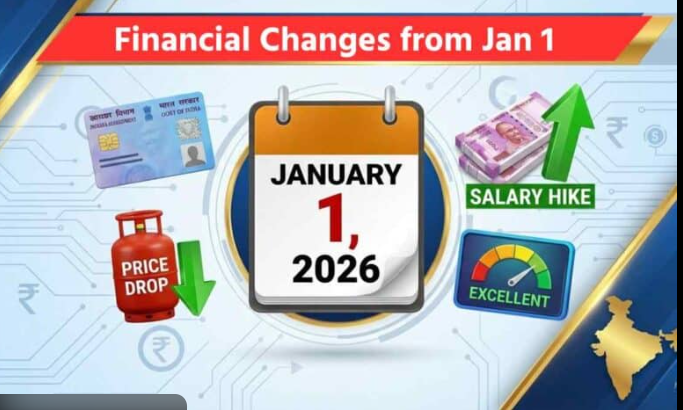
Major rules related to income tax, PAN-Aadhaar linking, banking and PM Kisan scheme will change across India from 1 January 2026.
Rules Change From 1 January 2026: Major Policy Updates Set to Impact Daily Life Across India
As India steps into the New Year 2026, several important rule changes related to income tax, banking, welfare schemes, and digital compliance will come into effect from 1 January 2026. These changes are expected to directly impact millions of citizens, including salaried employees, farmers, pensioners, and small business owners. The government has advised people to complete key formalities—such as PAN-Aadhaar linking and banking updates—before 31 December 2025 to avoid inconvenience.
Here is a detailed look at the major rules changing from 1 January 2026 and how they may affect your everyday life.
Income Tax Rules to Become Stricter
One of the most significant changes will be seen in the income tax system. From January 2026, stricter compliance measures are expected to be enforced to curb tax evasion and improve transparency. Individuals who fail to link their PAN with Aadhaar by the deadline may face serious consequences, including invalid PAN cards and higher tax deduction at source (TDS).
Additionally, tax authorities are expected to intensify scrutiny of high-value transactions such as large cash deposits, property purchases, and foreign remittances. Salaried taxpayers and freelancers are advised to maintain proper records and ensure timely filing of returns to avoid penalties.
PAN–Aadhaar Linking Mandatory
The mandatory linking of PAN and Aadhaar will play a crucial role from 1 January 2026. If PAN is not linked with Aadhaar, it may become inoperative, affecting banking transactions, mutual fund investments, and income tax refunds. This step is aimed at eliminating duplicate PANs and strengthening financial transparency.
Citizens are strongly advised to complete this linking well before the deadline to prevent disruptions in financial services.
Changes in PM Kisan Scheme
Farmers benefiting from the PM Kisan Samman Nidhi Yojana must also be cautious. From January 2026, beneficiaries who have not completed e-KYC, Aadhaar verification, or land record authentication may see their installments delayed or stopped.
The government’s objective is to ensure that benefits reach only genuine and eligible farmers. Completing all required documentation will be essential to continue receiving the annual financial assistance under the scheme.
Banking and Digital Payment Updates
Banks are expected to implement tighter Know Your Customer (KYC) norms starting in 2026. Customers with incomplete or outdated KYC details may face restrictions on transactions, including limits on withdrawals and digital payments.
At the same time, digital banking is likely to see enhanced security protocols. Two-factor authentication, updated mobile numbers, and verified email IDs may become mandatory for accessing online banking and UPI services smoothly.
Increased Focus on Digital and Cashless Economy
The government continues to push toward a cashless economy. From January 2026, increased reporting of digital transactions and stricter monitoring of cash usage may be enforced. Businesses, traders, and professionals will need to adapt to more transparent digital payment systems and comply with reporting requirements.
What Citizens Should Do Before 31 December 2025
To avoid last-minute trouble, citizens should:
- Ensure PAN is linked with Aadhaar
- Update bank KYC details
- Complete e-KYC for welfare schemes
- Review tax records and financial documents
- Stay informed about official notifications
Conclusion
The rules changing from 1 January 2026 are designed to improve transparency, efficiency, and accountability across India’s financial and welfare systems. While these changes may require some preparation, timely compliance will ensure a smooth transition into the New Year. Being proactive today will help citizens avoid penalties and enjoy uninterrupted access to financial and government services in 2026.
About the Author