Metro vs Auto: Bengaluru Man’s Fare Comparison Goes Viral
Metro vs Auto: Public transport fares have always been a topic of discussion, especially in metropolitan cities like Bengaluru, where daily commuters are constantly looking for cost-effective and time-efficient travel options. Recently, a Bengaluru resident’s social media post comparing the fares of Namma Metro and an auto-rickshaw has gone viral, sparking widespread debate about the affordability and convenience of urban transport.
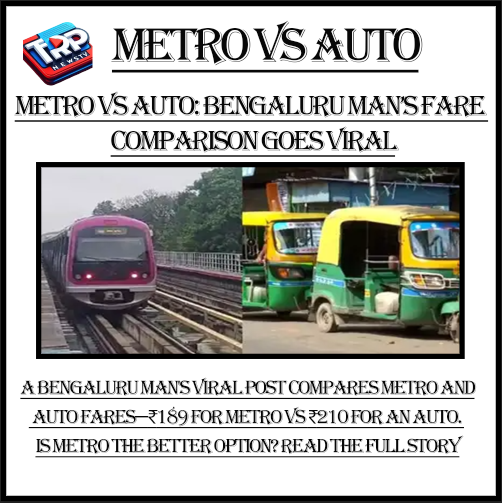
According to the post, the man traveled the same route twice – once via Bengaluru Metro, which cost him ₹189, and another time via an auto-rickshaw, which charged him ₹210. The revelation that an auto fare surpassed a metro ride in cost left many netizens both surprised and frustrated. The viral post has ignited discussions on the rising auto fares, the reliability of metro travel, and the overall cost of commuting in Bengaluru.
Let’s break down the incident, the reasons behind high auto fares, and whether metro travel is becoming a better alternative for daily commuters.
Metro vs. Auto: The Fare Breakdown
Metro vs Auto: The Commuter’s Experience
The Bengaluru resident shared his fare comparison experience on X (formerly Twitter) and highlighted how using the metro was not only cheaper but also more efficient.
- Metro Fare: ₹189
- Auto Fare: ₹210
He wrote:
“Took a metro ride from Point A to Point B and it cost me ₹189. Later, I took an auto for the same distance, and the driver charged me ₹210. Why is public transport like autos getting more expensive than metro rides?”
The post quickly gained traction, with thousands of likes, shares, and comments. Many users expressed their frustration over high auto fares, while others defended auto drivers, citing rising fuel costs and living expenses.
Why Are Auto-Rickshaw Fares So High?
Auto-rickshaws have traditionally been one of the most accessible and affordable modes of transport in Indian cities. However, in recent years, fares have increased significantly, sometimes making autos even costlier than metros or buses. But what’s causing this price surge?
1. Rising Fuel Prices
One of the primary reasons for increasing auto fares is the rising cost of petrol and CNG. In cities like Bengaluru, where fuel prices fluctuate frequently, auto drivers adjust their rates accordingly to maintain their earnings.
2. High Demand, Limited Availability
Due to heavy traffic congestion and metro expansion, many auto drivers now refuse shorter rides or demand higher fares for longer distances. Many passengers have reported instances where auto drivers decline rides if the fare is too low.
3. Online Booking Charges (Ola, Uber, Rapido)
With the rise of ride-hailing platforms like Ola, Uber, and Rapido, traditional meter fares are often ignored. Instead, dynamic pricing comes into play, leading to higher fares, especially during peak hours. Some passengers have even pointed out that booking an auto via an app costs nearly as much as a cab ride!
4. Refusal to Use Meters
Despite government regulations, many auto drivers refuse to go by the meter and prefer negotiating fares with passengers. This often results in overpriced rides, especially for tourists and outsiders unfamiliar with the city’s standard rates.
Metro vs Auto: Is Bengaluru Metro the Best Alternative?
Metro vs Auto: With rising auto fares and traffic congestion, more commuters are turning to Bengaluru Metro as a reliable option. Here’s why metro travel is becoming the preferred choice for many:
1. Cost-Effective
Even though metro fares are not the cheapest, they are still more economical than autos for long-distance travel. The fixed pricing ensures that passengers don’t have to worry about haggling or surge pricing.
2. Faster & More Reliable
Bengaluru is known for its heavy traffic jams, which can cause auto rides to take longer than expected. The metro, on the other hand, offers a faster, more predictable travel time, making it a great option for daily commuters.
3. No Fare Manipulation
Unlike auto-rickshaws, metro fares are standardized and transparent. Passengers can check ticket prices beforehand and don’t have to negotiate or worry about being overcharged.
4. Expansion of Metro Network
With the Namma Metro expanding rapidly, more areas are getting connected, reducing dependence on autos and cabs. As new routes open, metro travel is becoming more convenient for Bengaluru residents.
Public Reaction to the Viral Post
The viral social media post sparked a heated debate. Here are some of the reactions from netizens:
- One user wrote: “It’s ridiculous that autos are now more expensive than metros! The government should enforce strict fare regulations.”
- Another commented: “Auto drivers are charging whatever they want. I always prefer the metro now.”
- Some defended auto drivers, saying: “Fuel prices are high, and they also need to make a living. Blame the government, not the drivers.”
- A metro enthusiast added: “Metro is the best! No bargaining, no surge pricing, no delays due to traffic.”
While some people criticized the rising auto fares, others pointed out that metro tickets are not affordable for everyone.
Final Thoughts: Metro or Auto – Which One to Choose?
So, should you take the metro or an auto in Bengaluru? The answer depends on your budget, time, and convenience.
✔ Choose the Metro if:
- You want a cost-effective and reliable travel option.
- You want to avoid traffic congestion.
- You prefer fixed pricing without haggling.
✔ Choose an Auto if:
- You need door-to-door travel, especially for short distances.
- There’s no metro connectivity in your area.
- You’re traveling with heavy luggage or in a group.
Ultimately, while autos provide flexibility, metro travel is becoming the more reliable and economical choice for long distances in Bengaluru.
About the Author