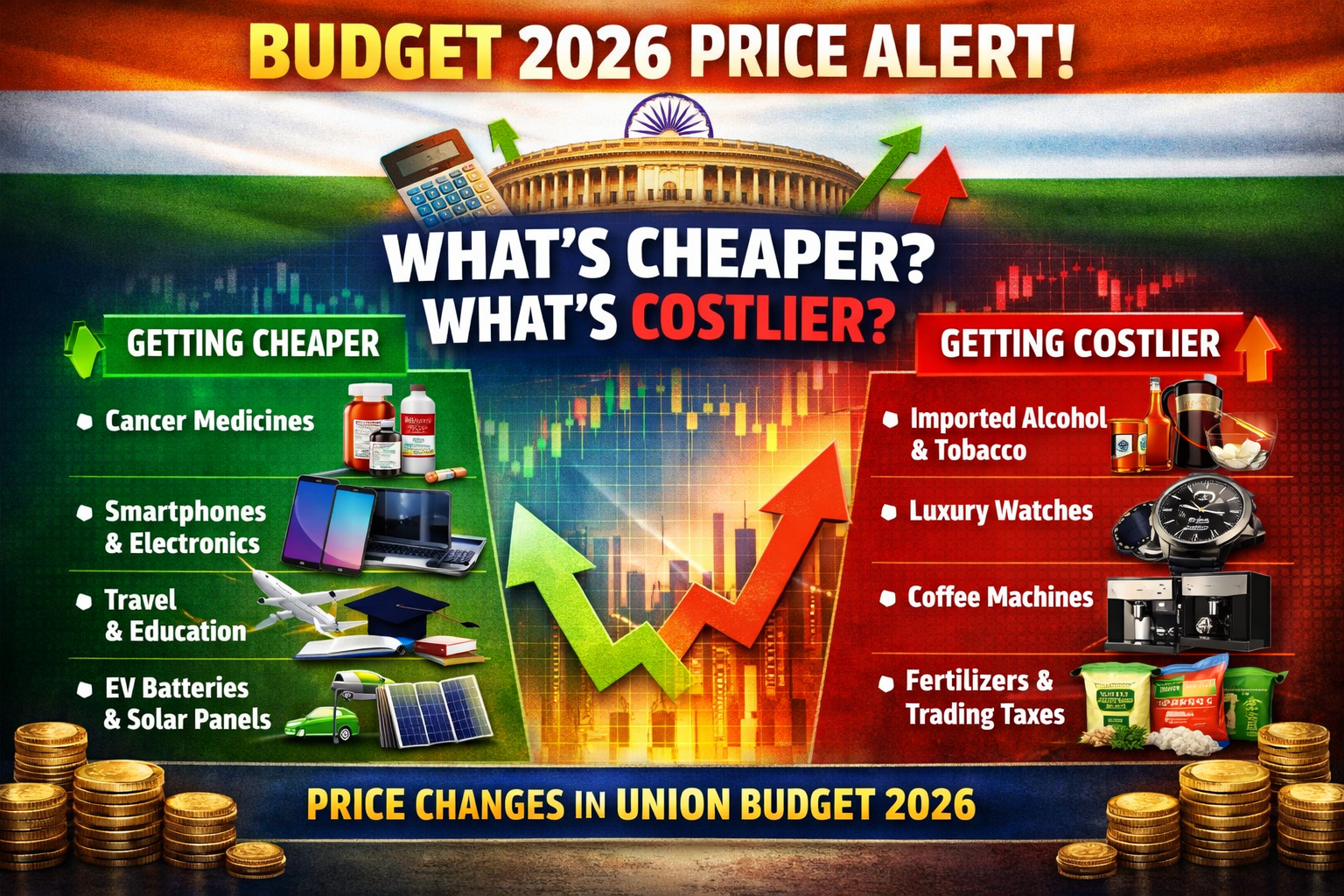
An infographic showing the impact of Union Budget 2026 on prices of medicines, electronics, travel, luxury goods, and other consumer items in India.
Budget 2026 Price Alert: What Became Cheaper and What Turned Costlier for Indian Consumers
The Union Budget 2026–27 has brought noticeable changes to the prices of many everyday goods and services in India. By revising customs duties, taxes, and exemptions, the government has aimed to support domestic manufacturing, healthcare access, and long-term economic growth. However, these changes also mean that some items will now cost less, while others will become more expensive for consumers.
The new budget has a mixed impact on households, offering relief in essential sectors such as healthcare and technology, while raising prices in areas linked to luxury and non-essential consumption.
Items That Became Cheaper
Several products related to health, travel, and electronics are expected to see a price drop after the new tax measures.
Cancer Drugs and Rare Disease Medicines
The government has removed or reduced customs duty on several high-cost cancer medicines and drugs used to treat rare diseases. This move is expected to make life-saving treatments more affordable for patients and families who depend on imported medicines.
Overseas Travel and Education Expenses
Tax Collection at Source (TCS) on foreign tour packages has been reduced to 2 percent, lowering the cost of international travel for middle-class families. In addition, the tax burden on money sent abroad for education purposes has been eased, helping parents who support students studying overseas.
Smartphones, Electronics, and Appliances
Customs duty cuts on smartphone components, tablets, and microwave oven parts are expected to reduce production costs. As a result, consumers may see more competitive pricing on mobile phones and selected home appliances assembled in India.
Leather and Sports Goods
Inputs used in the manufacturing of leather products and sports equipment have received duty relief. This could lead to lower prices for shoes, bags, and sports gear while also boosting domestic production and exports.
EV Batteries, Aircraft Parts, and Solar Equipment
Components for electric vehicle batteries, aircraft maintenance, and solar panel manufacturing have been granted duty exemptions. These steps aim to strengthen clean energy and aviation sectors and could gradually reduce costs for eco-friendly products.
Personal Imports from Abroad
Customs duty on personal imports has been rationalised and lowered from 20 percent to 10 percent. This benefits consumers who order products from foreign e-commerce platforms or bring goods from overseas.
Items That Became Costlier
Alongside relief measures, the Budget has also increased taxes on several categories of goods.
Imported Alcohol and Tobacco Products
Imported liquor, cigarettes, and tobacco items will now cost more due to higher duties and additional cess. The government aims to discourage consumption while also increasing revenue from these products.
Coffee Machines and Related Equipment
Duty exemptions on imported coffee roasting and brewing machines have been withdrawn. This could make machine-brewed coffee more expensive in cafés, offices, and restaurants as businesses pass on the higher equipment costs to customers.
Luxury Watches and Fashion Imports
High-end watches, luxury apparel, and certain fashion accessories have become more expensive following increased customs duties. These changes mainly affect premium and imported lifestyle products.
Fertilisers and Industrial Inputs
Some fertiliser raw materials and industrial chemicals have lost earlier duty exemptions, raising production costs for agriculture and manufacturing sectors. This may indirectly affect food prices and industrial output over time.
Market Trading Costs
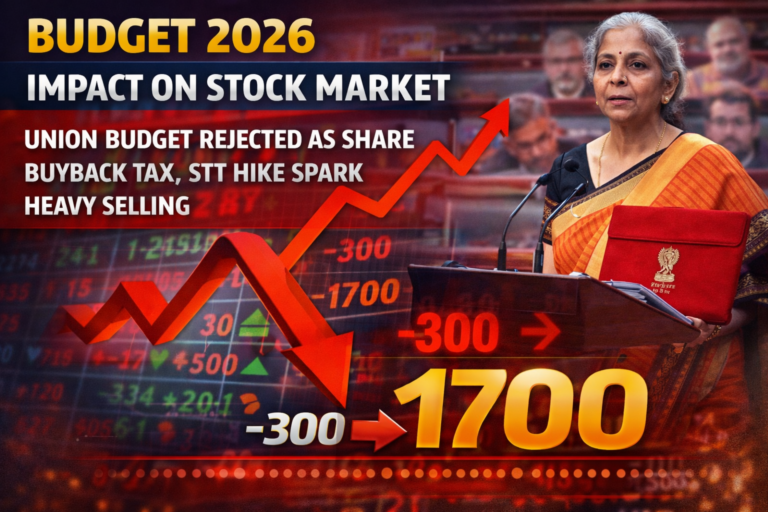
The Securities Transaction Tax on futures and options trading has been increased. This will raise transaction costs for traders and investors active in stock markets.
Impact on Consumers
The Budget 2026 price changes reflect a balance between long-term development goals and immediate consumer impact. While healthcare and technology sectors benefit from cost reductions, higher prices on luxury goods, tobacco, and imported equipment indicate stricter taxation policies.
For Indian households, these changes will influence spending on medical care, travel, electronics, and lifestyle products. Over the coming months, consumers are expected to feel the effects through shopping bills, service charges, and investment costs.
Overall, the Union Budget 2026 reshapes the price structure of many essential and non-essential goods, guiding consumer behavior and supporting priority sectors of the economy.
About the Author