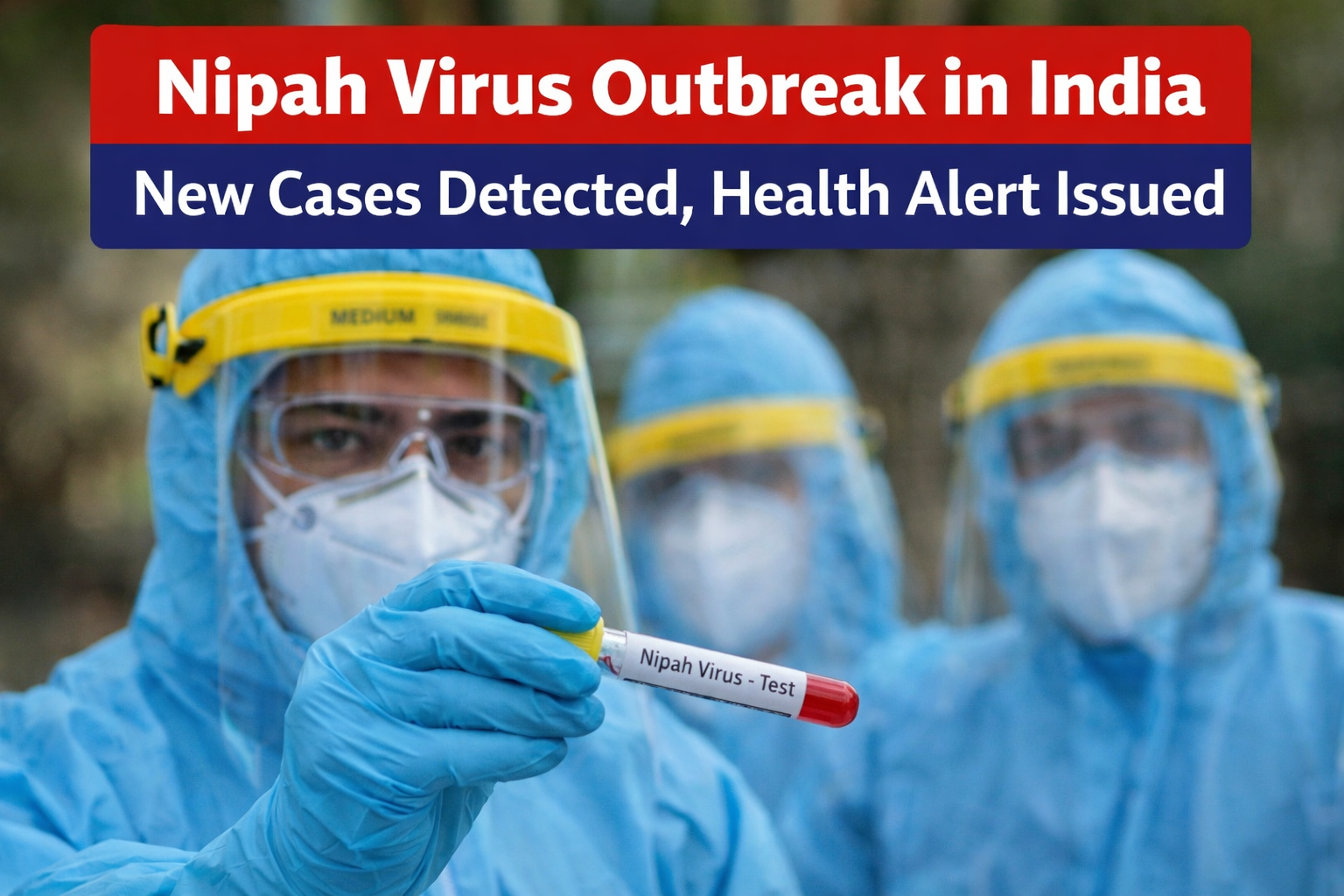
Medical staff examine a Nipah virus test sample as authorities issue a health alert after new cases are detected in India.
Nipah Virus Outbreak Raises Health Alert in India as New Cases Reported
India is once again on high alert after fresh cases of the deadly Nipah virus were detected, triggering concern among health authorities and the public. The virus, which is known for its high fatality rate and rapid transmission, has prompted emergency surveillance and containment measures in affected regions.
According to health officials, the latest cases were identified in a district where a patient tested positive for Nipah virus following severe symptoms such as fever, headache, vomiting, and respiratory distress. The patient was immediately isolated, and contact tracing efforts were launched to prevent further spread. Medical teams have been deployed to monitor individuals who may have come into close contact with the infected person.
The Nipah virus is a zoonotic disease, meaning it spreads from animals to humans. Fruit bats of the Pteropus species are considered the natural carriers of the virus. Humans can become infected through direct contact with infected animals, consumption of contaminated fruits or raw date palm sap, or through close contact with infected persons. In hospital settings, the virus can spread rapidly if strict infection control measures are not followed.
Health departments have identified more than 24 high-risk contacts in the affected area and placed them under observation. Samples from these individuals are being tested regularly. Authorities have also sealed certain zones and restricted movement in order to contain any possible outbreak. Schools and public gatherings in nearby regions have been advised to follow strict hygiene protocols.
The Union Health Ministry has assured the public that all necessary precautions are being taken. Rapid Response Teams (RRTs) and National Centre for Disease Control (NCDC) experts have been sent to support state authorities. Hospitals have been instructed to prepare isolation wards and ensure the availability of personal protective equipment (PPE), ventilators, and antiviral medicines.
Medical experts warn that Nipah virus infections can be extremely serious. The mortality rate has ranged between 40% and 75% in past outbreaks. Symptoms usually appear within 5 to 14 days of exposure and may progress to encephalitis (inflammation of the brain), leading to confusion, seizures, and coma in severe cases. There is currently no specific vaccine or proven treatment for Nipah virus, making early detection and supportive care crucial.
Public awareness campaigns have been intensified to educate people about preventive measures. Citizens have been advised to avoid consuming fallen or partially eaten fruits, especially in areas known for bat populations. Drinking raw date palm sap has also been discouraged, as it can be contaminated by bat secretions. People are urged to wash fruits thoroughly and maintain proper hand hygiene.
The government has also increased monitoring at airports and railway stations, particularly for travelers coming from regions with reported cases. Thermal screening and health declarations are being used to detect possible infections early.
This is not the first time India has faced a Nipah virus scare. Kerala has reported multiple outbreaks since 2018, with swift action by health authorities helping to control the spread. Lessons learned from previous outbreaks have strengthened India’s preparedness and response systems.
Health officials emphasize that there is no need for panic but stress the importance of caution and cooperation. “Early reporting of symptoms and adherence to safety guidelines can save lives,” a senior health officer stated.
As investigations continue, authorities are hopeful that quick intervention will prevent the virus from spreading further. The situation remains under close watch, and updates are expected as more test results become available. The public has been urged to rely only on official sources for information and avoid spreading rumors or misinformation.
About the Author