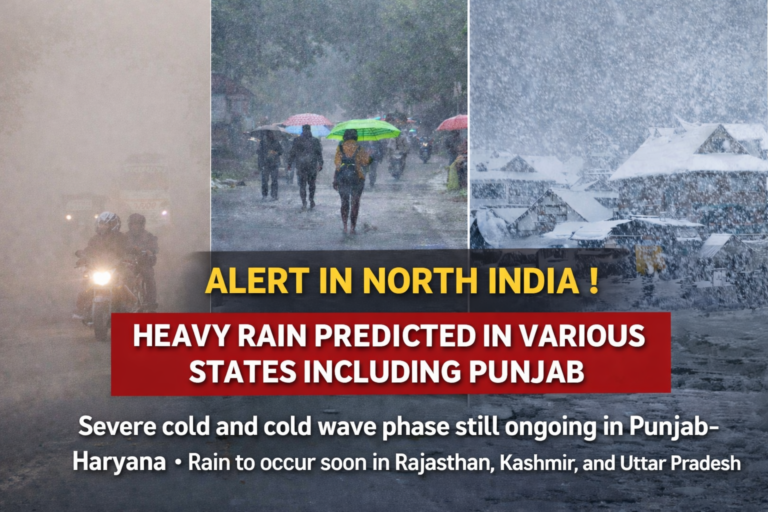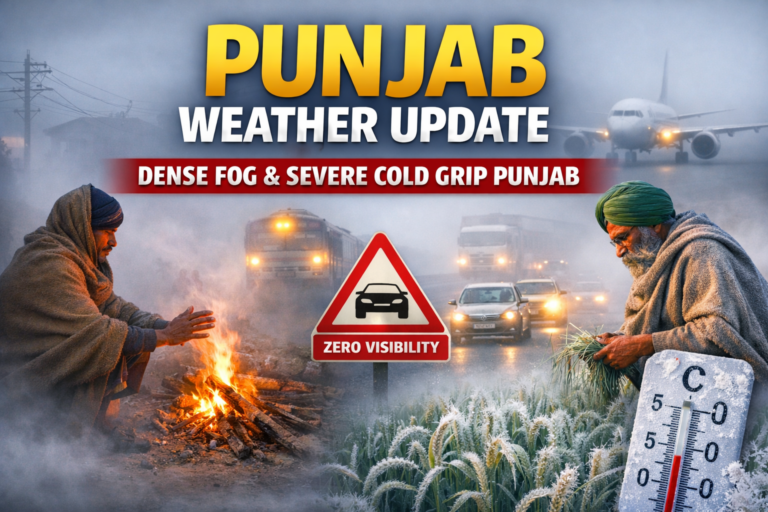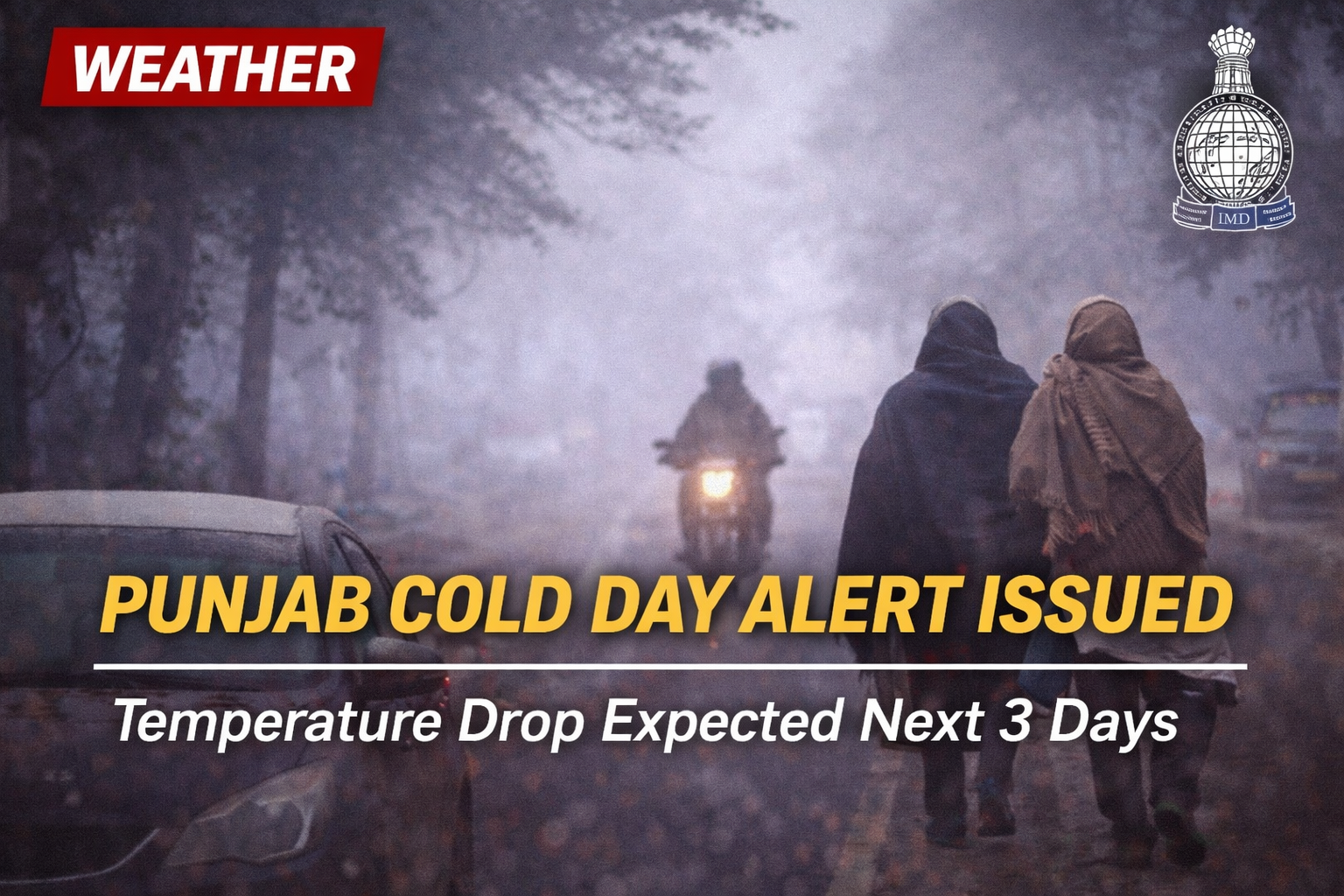
Residents walk through dense fog in Punjab after the weather department issued a cold day alert for the next three days.
Punjab Braces for Sharper Cold as Temperatures Set to Drop Further; Cold Day Alert Issued for Three Days
Punjab is set to experience a further drop in temperatures over the coming days, with weather authorities issuing a Cold Day alert for three consecutive days. The warning comes amid already harsh winter conditions across the state, as chilly winds, dense fog, and low daytime temperatures continue to disrupt daily life.
According to weather experts, a fresh western disturbance combined with northerly cold winds is expected to intensify cold conditions across large parts of Punjab. As a result, both daytime and nighttime temperatures are likely to remain well below normal, increasing the risk of cold-related discomfort, especially for vulnerable populations.
What Is a Cold Day?
A “Cold Day” is declared when the maximum daytime temperature drops significantly below normal levels, even if sunlight is present. In such conditions, people feel colder during the day despite clear skies, as icy winds and low ambient temperatures dominate. Meteorologists say Punjab is likely to witness this phenomenon for at least the next three days.
In many districts, maximum temperatures are expected to remain in single digits or low double digits, while minimum temperatures could fall close to the freezing mark in some areas. This combination increases the severity of winter conditions, particularly during early morning and late evening hours.
Districts Likely to Be Affected
Several districts across central, northern, and western Punjab are expected to remain under the Cold Day alert. These include Amritsar, Gurdaspur, Pathankot, Hoshiarpur, Jalandhar, Ludhiana, Patiala, Sangrur, Moga, Bathinda, and Ferozepur. Border and rural areas are likely to feel the impact more intensely due to open landscapes and persistent cold winds.
Dense fog may also accompany the cold wave in many regions, especially during night and early morning hours. Visibility could drop sharply in some pockets, affecting road, rail, and air travel.
Impact on Daily Life
The sharp dip in temperatures is already being felt across Punjab. Morning routines have slowed down, with people preferring to stay indoors longer to avoid the biting cold. Schools in some areas have adjusted timings, while farmers and daily wage workers are facing difficulties starting work early in the day.
Dense fog and cold conditions are also increasing the risk of road accidents. Authorities have advised drivers to use fog lights, maintain safe distances, and avoid unnecessary travel during low-visibility hours.
Health Advisory Issued
Doctors and health officials have urged residents to take extra precautions during the cold spell. Elderly people, children, and those suffering from respiratory or heart-related ailments are particularly at risk. Prolonged exposure to cold can lead to hypothermia, respiratory infections, and worsening of existing medical conditions.
Health experts recommend wearing layered clothing, keeping the head and hands covered, consuming warm food and beverages, and avoiding early morning exposure unless necessary. People experiencing symptoms such as persistent cough, chest pain, or extreme fatigue are advised to seek medical attention promptly.
Effect on Agriculture
The cold wave may have mixed effects on agriculture. While low temperatures can benefit certain rabi crops like wheat by slowing excessive growth, prolonged cold and frost-like conditions can damage vegetables and horticultural produce. Farmers have been advised to take protective measures such as light irrigation and covering sensitive crops where possible.
What to Expect Ahead
Weather officials say that while the cold conditions are likely to persist for at least three days, temperatures may gradually rise afterward if wind patterns change. However, intermittent fog and chilly mornings could continue even after the Cold Day alert is lifted.
Residents across Punjab are advised to stay updated with local weather bulletins and follow safety advisories. As winter tightens its grip, preparedness and caution remain key to staying safe during this intense cold spell.
About the Author