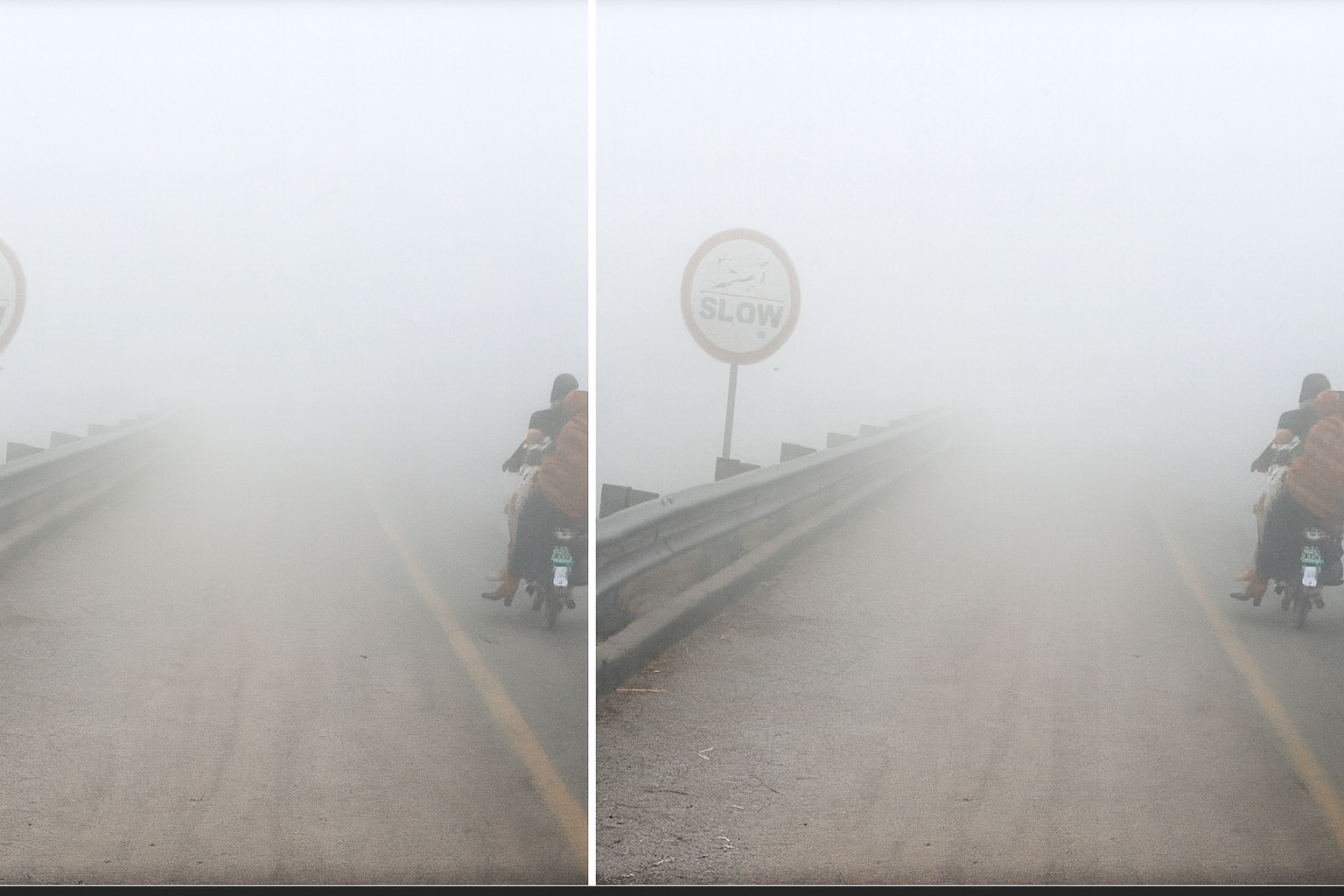
Dense fog disrupts visibility on a North India highway as commuters navigate cautiously during severe winter conditions.
North India Winter Fog. Dense Fog Alert in Punjab: Yellow Warning Issued for 13 Districts as Visibility Expected to Drop Significantly
The India Meteorological Department (IMD) has issued a dense fog alert across Punjab, placing 13 districts under a Yellow Warning for the next four days. According to officials, several parts of the state are likely to remain covered under persistent dense to very dense fog, which may severely affect visibility, transport, and daily routines.
The districts expected to face the most impact include Amritsar, Gurdaspur, Tarn Taran, Jalandhar, Ferozepur, Ludhiana, Patiala, Sangrur, Barnala, Moga, Bathinda, Faridkot, and Fazilka. In these areas, visibility is predicted to drop significantly, especially during late-night and early-morning hours.
IMD Warns of Reduced Visibility and Disruption
Meteorologists explained that the current fog formation is the result of plummeting night temperatures combined with high moisture levels and calm winds. This weather pattern creates ideal conditions for fog layers to develop and remain suspended close to the ground.
The IMD noted that visibility could fall below 50 metres in some pockets of Punjab, raising concerns about safe travel. Dense fog is expected to remain especially severe along highways, agricultural belts, and river-adjacent regions.
Officials also stated that fog conditions may extend into mid-morning on several days, delaying school hours, slowing traffic, and affecting flight and train schedules.
Advisory for Drivers and Commuters
Given the likely disruptions, the administration has urged residents to exercise extreme caution while travelling. Drivers have been advised to:
- Use fog lights instead of high beams
- Maintain slower speeds and safe distance from other vehicles
- Follow reflective road signs and lane markers
- Avoid unnecessary travel during peak fog hours
- Keep emergency lights on when visibility becomes poor
Transport authorities have also prepared guidelines for bus operators and highway patrol units to ensure smoother traffic management during early mornings.
Impact on Daily Life and Agriculture
While fog is a typical winter phenomenon in North India, extended periods of dense fog can influence several sectors. Experts suggest that air travel may experience delays, rescheduling, and possible cancellations if visibility continues to dip.
Railway officials also anticipate disruptions, as fog often forces trains to run at reduced speeds. Commuters relying on morning public transport may face longer travel times.
In agricultural regions, particularly where wheat, mustard, and vegetable crops are currently in growth stages, fog may bring both benefits and challenges. While it helps maintain ground moisture, prolonged foggy conditions without sufficient sunlight may temporarily slow crop growth.
Farmers have been advised to monitor crop conditions and avoid excessive irrigation during this period.
Residents Urged to Stay Updated
Authorities have appealed to citizens to stay informed through weather updates issued by the IMD and local administrations. Schools and offices may adjust timings if fog persists.
Health experts also recommend precautions for the elderly, children, and those with respiratory conditions, as fog mixed with pollution can irritate the lungs and eyes.
With Punjab set to experience four consecutive days of dense fog, the state is preparing for potential disruptions in visibility and transportation. The Yellow Alert serves as a warning to remain vigilant, plan travel responsibly, and prioritize safety. As winter intensifies, residents are encouraged to follow official advisories to navigate the challenging weather conditions safely.
About the Author